KCF-18
Immune Research only Animal studies
A synthetic peptide designed from the binding regions of cytokine receptors. It attaches to several inflammatory signals at once, including TNF-α and IL-6, and keeps them from reaching their receptors. In mice it reduced white blood cell infiltration and vascular inflammation.
Evidence at a glance
- Evidence
- Animal studies — Not yet studied in people
- Status
- Research compound only
- Dosing
- No human study has set a dose
Very early research; one group, no human data.
What studies report
- Blocked TNF-alpha and IL-6 from reaching their receptors in cell studies
- Reduced white cell infiltration in a mouse peritonitis model
How it works
Designed from the binding faces of cytokine receptors. It is charged and partly water-repelling, letting it grip several inflammatory signals at once — TNF-α and IL-6 among them — so they never reach their own receptors.
Where it acts
 Thymus
The library groups this compound under Immune. The diagram shows that target, not every tissue it reaches.
Illustrated
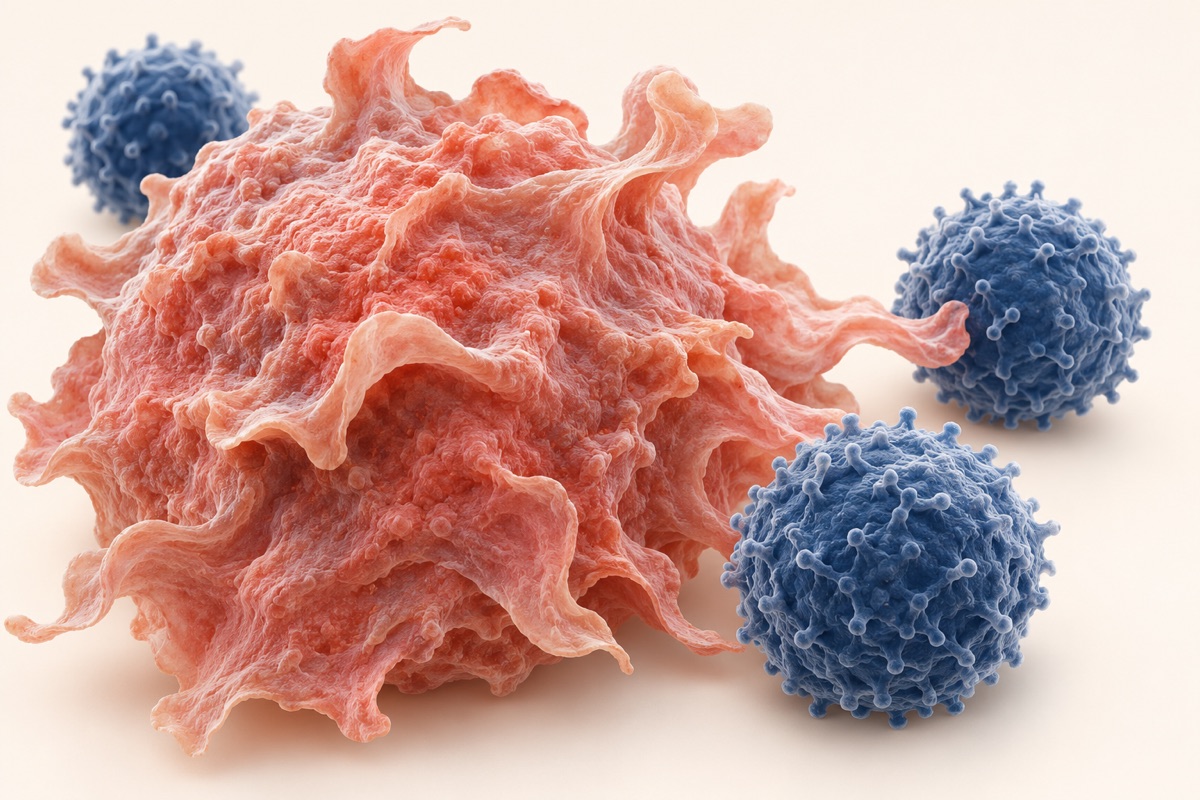
AI-generated subject illustration; not a depiction of the compound or evidence of its effects.
Why people take it
Reasons people seek it out — not a list of proven effects.
Status: Early cell and mouse research only.
- Route
- Subcutaneous injection, from reconstituted lyophilised powder
- Available as
- 10 mg
Search PubMed for KCF-18 → We link a live search rather than a fixed citation list, so it stays current and nothing here is a reference we have not checked.
Educational information only. Nothing here is medical advice, a dosing protocol, or a recommendation to use any compound. Most entries describe substances not approved for human use. Talk to a licensed clinician before acting on anything you read here. How to read these entries.