Ventfort (A-3 Blood vessels)
Blood vessels Supplement / supply Preliminary Natural organ complex (Cytomax)
Also called BioBloodvessels, Peptide complex A-3
A natural peptide complex extracted from the blood vessel of young animals, sold in capsules rather than as a synthetic peptide. It belongs to the Cytomax line of organ bioregulators developed from Vladimir Khavinson's work — the idea being that peptides from an organ carry signals that help that same organ in the recipient.
Evidence at a glance
- Evidence
- Preliminary — Very little published work
- Status
- Supplement or supply
- Dosing
- No human study has set a dose
This is an animal-derived supplement, not a characterised single peptide — the exact composition is not public, so there is no sequence or molecular weight to verify. Supporting studies come almost entirely from the group that developed the line, and the category is regulated as a dietary supplement rather than a medicine. Nature's Marvels sells this position in the line as "Blood Cells" rather than blood vessels; their product pages are not public, so treat that mapping as likely rather than confirmed.
What studies report
- Promoted for normalising blood vessel function and reducing what the developers call peptide deficiency
- Russian studies on this family report effects on organ-specific gene expression and protein synthesis
- Marketed as a geroprotector, intended to slow age-related decline in its target organ
How it works
Khavinson peptides are short enough — two to four amino acids — to survive digestion and cross cell and nuclear membranes intact. The proposed mechanism is that they dock onto specific sites on nuclear DNA and change which genes are switched on, rather than acting on a surface receptor like most peptides. The organ-specificity claim is that peptides taken from one organ act selectively on that same organ in the recipient.
Where it acts
 Acts in blood vessels, throughout the body
The library groups this compound under Blood vessels. The diagram shows that target, not every tissue it reaches.
Illustrated
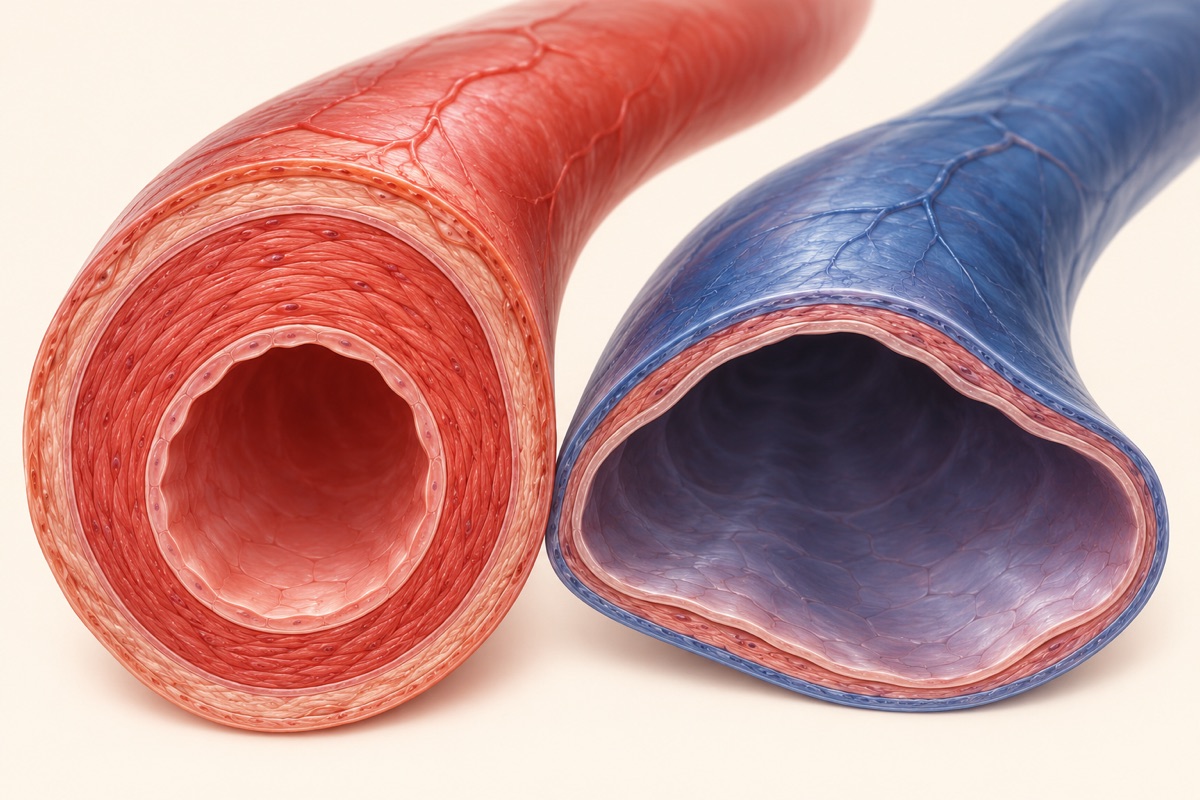
AI-generated subject illustration; not a depiction of the compound or evidence of its effects.
Why people take it
Reasons people seek it out — not a list of proven effects.
In practice Unapproved use
- Taken as capsules in short monthly pulses rather than continuously
- Stacks usually start with a pineal and thymus base, adding two to four organ complexes chosen by health history
- The blood-vessel complex is commonly added to the stack to support delivery to target tissue
- Practitioners tend to layer them over months to years rather than running single courses
Science hasn't caught up: An established practice with decades of use, built almost entirely on one research group's studies and no independent replication.
Reported real-world use, not evidence and not a recommendation.
How it is taken
Taken in pulses rather than continuously — typically 2 capsules a day for 10 days a month, or 10–14 days every one to six months, with time off in between. Stacks usually pair a pineal and thymus base with two to four organ-specific complexes, often adding the blood-vessel complex to support delivery. This is how the products are commonly used and marketed; it is not a clinically validated dosing schedule, and it is not a recommendation.
Where it comes from
Extracted from the organs of young calves — the source material cites 12-month-old cattle raised in Denmark — then fractionated down to a peptide powder. Some are also produced synthetically to match the natural sequence.
Status: Sold as a dietary supplement. Not an approved medicine.
- Route
- Oral capsule — small enough to survive digestion intact, which is the whole point of the class
- Form
- Oral capsule
- Source
- Animal organ tissue
- Also sold as
- BioBloodvessels, EternaPeptix A-3, Nature's Marvels Blood Cells Bioregulator, Ventfort
- Sold by
- Canlab International, BioLongevity Labs, EternaPeptix (Qi Supplements), Nature's Marvels
- Available as
- 20 mg per capsule (EternaPeptix), 40 mg per capsule (BioLongevity)
Search PubMed for Ventfort (A-3 Blood vessels) → We link a live search rather than a fixed citation list, so it stays current and nothing here is a reference we have not checked.
Educational information only. Nothing here is medical advice, a dosing protocol, or a recommendation to use any compound. Most entries describe substances not approved for human use. Talk to a licensed clinician before acting on anything you read here. How to read these entries.