Zinc Thymulin
Skin & hair Research only Human trials
Thymulin, the thymus hormone, complexed with the zinc it needs to be active at all. Applied to the scalp rather than injected, it is studied for hair growth — a use unrelated to thymulin's immune role.
Evidence at a glance
- Evidence
- Human trials — Studied in people
- Status
- Research compound only
- Dosing
- No human study has set a dose
One small topical study underpins the hair claim. Thymulin itself is well characterised as an immune hormone, but that body of work says nothing about applying it to a scalp.
What studies report
- Significantly increased hair growth over 6 months in a topical study
- No systemic or local side effects reported in that study
- Reported to stimulate pigment production in greying hair
How it works
Thymulin requires zinc for biological activity. The hair effect is attributed to stimulation of the follicle growth phase, with reported effects on melanogenesis in greying hair.
Where it acts
 Acts in the skin, throughout the body
The library groups this compound under Skin & hair. The diagram shows that target, not every tissue it reaches.
Illustrated
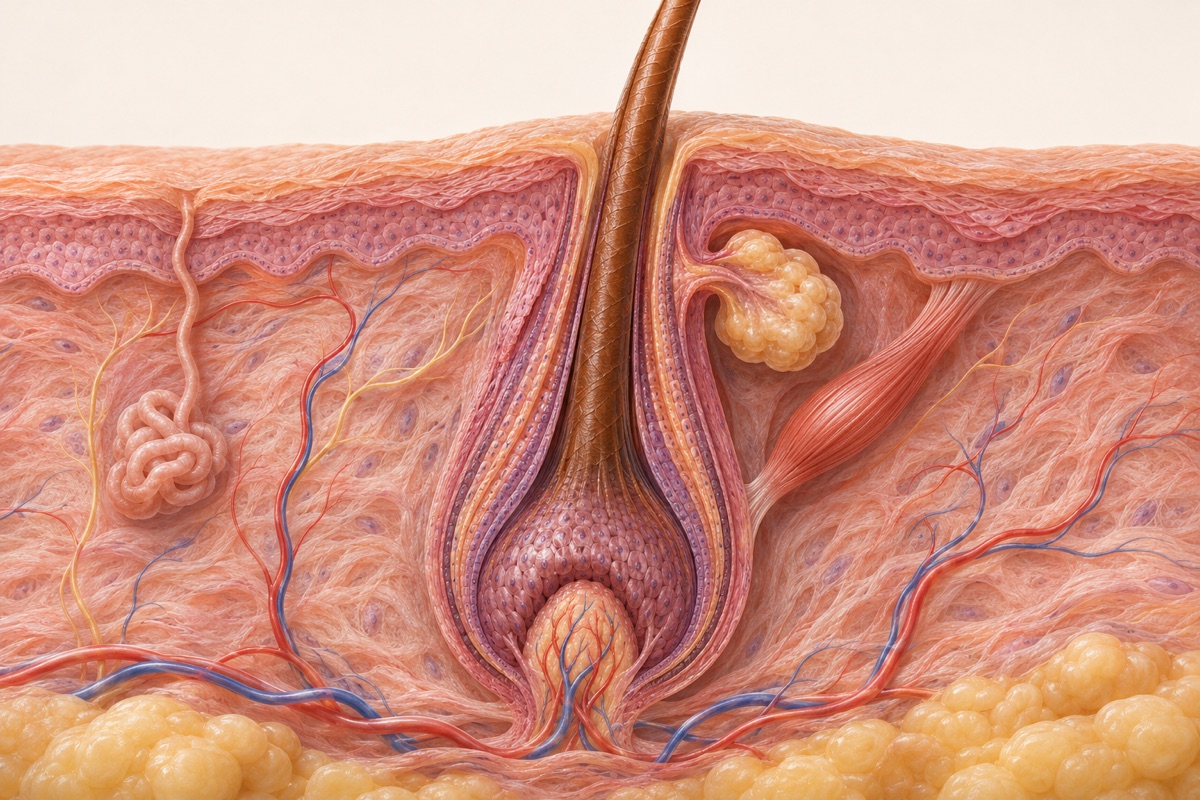
AI-generated subject illustration; not a depiction of the compound or evidence of its effects.
Why people take it
Reasons people seek it out — not a list of proven effects.
In practice Unapproved use
- Applied nightly to the scalp
- Often combined with minoxidil rather than replacing it
Reported real-world use, not evidence and not a recommendation.
Status: Research compound, available compounded. Not approved for hair loss.
- Route
- Topical scalp foam
- Available as
- Topical foam
Search PubMed for Zinc Thymulin → We link a live search rather than a fixed citation list, so it stays current and nothing here is a reference we have not checked.
Educational information only. Nothing here is medical advice, a dosing protocol, or a recommendation to use any compound. Most entries describe substances not approved for human use. Talk to a licensed clinician before acting on anything you read here. How to read these entries.