Vesugen
Blood vessels Research only Human trials Synthetic short peptide (Cytogen)
Also called KED peptide
A three-amino-acid Khavinson peptide associated with the lining of blood vessels. Studies report effects on endothelial cell growth and on markers tied to atherosclerosis, with related work on neuron resilience in models of aging.
Evidence at a glance
- Evidence
- Human trials — Studied in people
- Status
- Research compound only
- Dosing
- No human study has set a dose
Cell and animal data plus small Russian studies.
What studies report
- Effects on endothelial cell growth and atherosclerosis markers
- Related work on neuron resilience in aging models
How it works
A Khavinson short peptide: at two to four amino acids it is small enough to pass through cell and nuclear membranes intact. The proposed mechanism is that it binds specific sites on nuclear DNA and changes which genes are switched on in its target tissue, rather than acting on a surface receptor the way most peptides do.
Where it acts
 Acts in blood vessels, throughout the body
The library groups this compound under Blood vessels. The diagram shows that target, not every tissue it reaches.
Illustrated
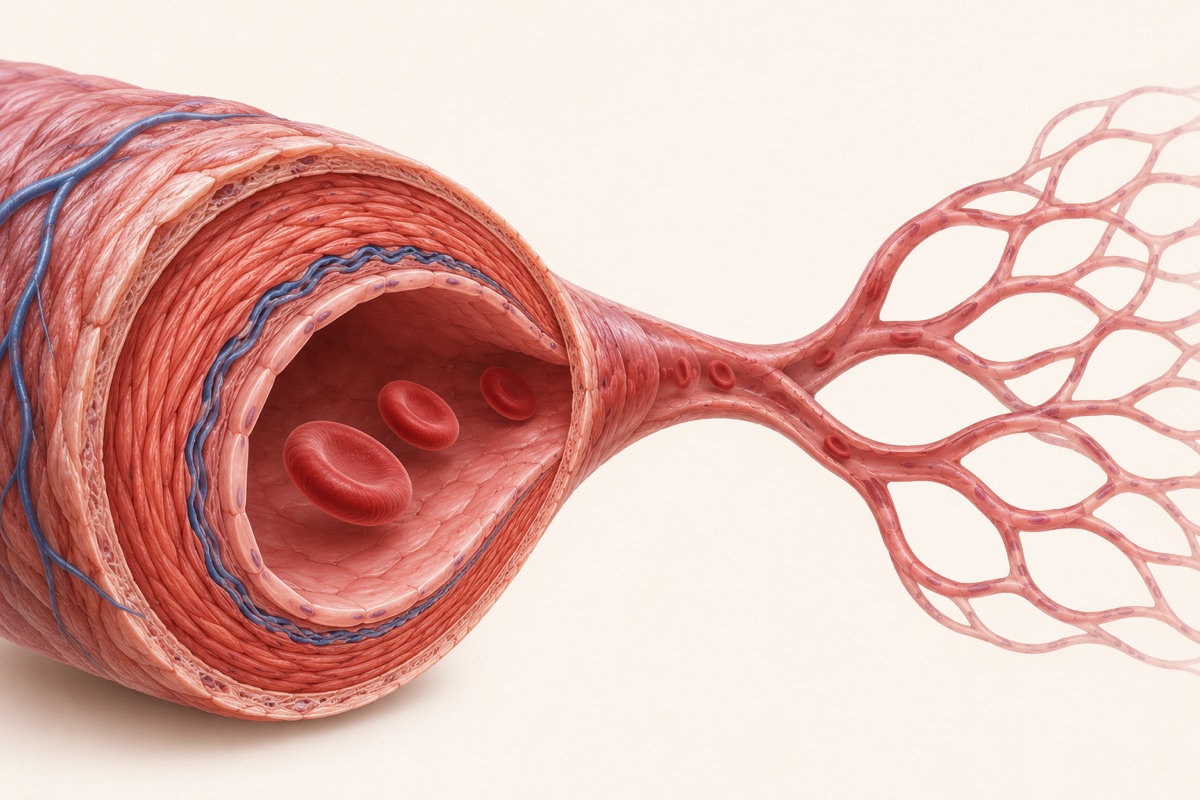
AI-generated subject illustration; not a depiction of the compound or evidence of its effects.
Why people take it
Reasons people seek it out — not a list of proven effects.
Status: Cell and animal data, plus small Russian human studies.
- Route
- Subcutaneous injection, or oral capsule depending on the preparation
- Sequence
- Lys-Glu-Asp
- Formula
- C15H26N4O8
- Molecular weight
- 390.39 g/mol
- Available as
- 20 mg
Search PubMed for Vesugen → We link a live search rather than a fixed citation list, so it stays current and nothing here is a reference we have not checked.
Educational information only. Nothing here is medical advice, a dosing protocol, or a recommendation to use any compound. Most entries describe substances not approved for human use. Talk to a licensed clinician before acting on anything you read here. How to read these entries.