Colivelin
Cognitive & neuro Research only Animal studies
A 26-amino-acid hybrid that fuses a fragment of activity-dependent neurotrophic factor to a potent humanin derivative. It was designed to protect neurons, and in cell and mouse models of Alzheimer's disease it blocked cell death and memory loss at very low doses. It is also used in labs as a STAT3 activator.
Evidence at a glance
- Evidence
- Animal studies — Not yet studied in people
- Status
- Research compound only
- Dosing
- No human study has set a dose
No human data at all.
What studies report
- Prevented neuron death and memory loss in Alzheimer's mouse models at very low doses
- Protected motor neurons in ALS models
How it works
Fuses a fragment of activity-dependent neurotrophic factor to a potent humanin derivative. It activates STAT3 signalling in neurons, which blocks the apoptosis pathway that amyloid and other insults trigger.
Where it acts
 Brain
The library groups this compound under Cognitive & neuro. The diagram shows that target, not every tissue it reaches.
Illustrated
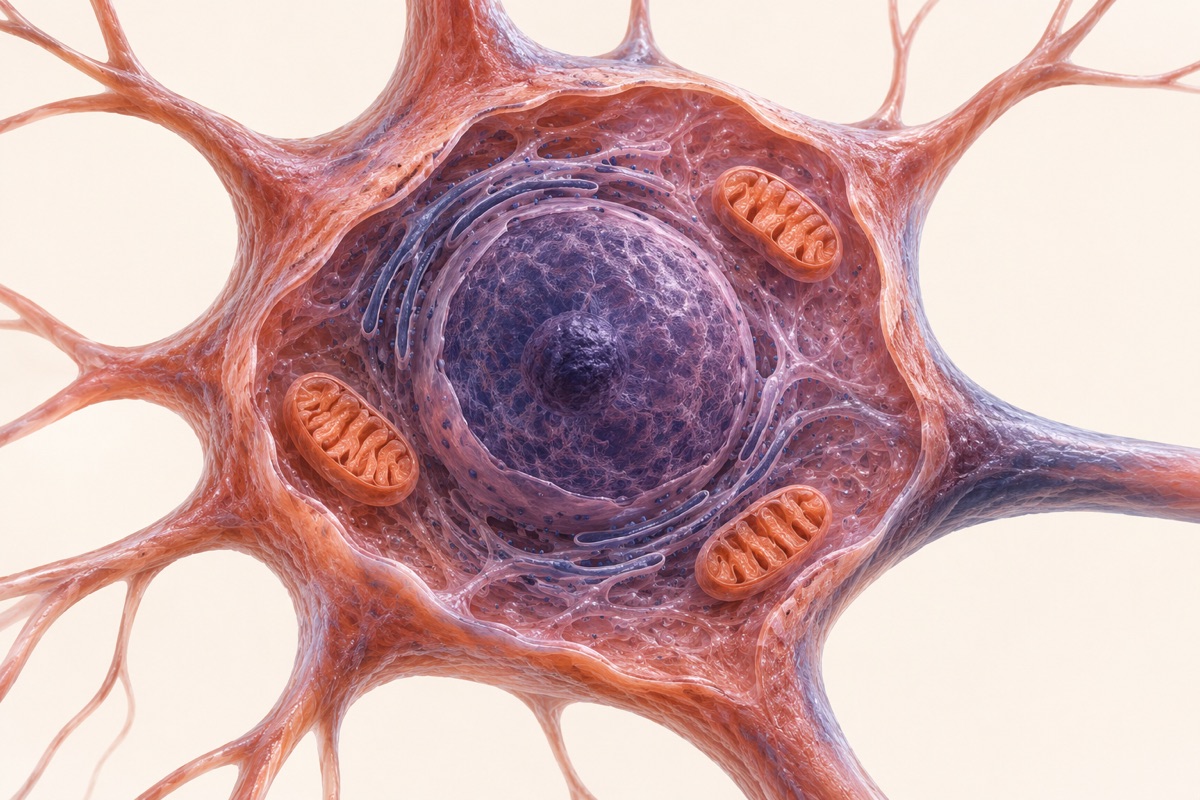
AI-generated subject illustration; not a depiction of the compound or evidence of its effects.
Why people take it
Reasons people seek it out — not a list of proven effects.
Status: Cell and animal research only.
- Route
- Subcutaneous injection, from reconstituted lyophilised powder
- Sequence
- SALLRSIPAPAGASRLLLLTGEIDLP
- Formula
- C119H206N32O35
- Molecular weight
- 2645.1 g/mol
- CAS
- 867021-83-8
- Available as
- 0.5 mg
Search PubMed for Colivelin → We link a live search rather than a fixed citation list, so it stays current and nothing here is a reference we have not checked.
Educational information only. Nothing here is medical advice, a dosing protocol, or a recommendation to use any compound. Most entries describe substances not approved for human use. Talk to a licensed clinician before acting on anything you read here. How to read these entries.